
Software-Defined Vehicles (SDVs) & Multi-Gigabit Automotive Ethernet
Introduction
Consumer purchasing decisions have shifted away from traditional mechanical attributes toward software-driven features, such as advanced driver assistance systems (ADAS), intelligent connectivity, and automated driving capabilities. Modern automobiles function as Software-Defined Vehicles (SDVs), operating with over 100 microprocessors, up to 100 million lines of software code, and high data bandwidth requirements that legacy vehicle networks cannot support.
The Shift to Software-Defined Vehicle Architecture
- Software-Driven Differentiation: Features defined by software—such as lane departure warnings, automated parking, driver monitoring, and autonomous navigation—have become the primary battleground for vehicle product differentiation.
- Increasing Electronics Cost Share: Hardware and software components account for up to 45% of total vehicle cost today and are projected to reach 50% across all vehicle segments by 2030.
- Over-the-Air (OTA) Updates: Managing, updating, and flashing large software and firmware images across up to 150 electronic control units (ECUs) requires high-speed in-vehicle communication backbones to minimize update times.
High-Bandwidth Demands for ADAS and Sensor Fusion
- Legacy Network Limitations: Traditional automotive networks like CAN FD (approaching 10 Mb/s) and FlexRay (10 Mb/s) lack the throughput needed for high-resolution vision systems, radar, and sensor fusion platforms.
- Advanced Safety Systems: Features such as real-time driver fatigue monitoring, surround-view camera arrays, and automated collision avoidance require high-bandwidth networks to route multi-megapixel video feeds to central domain controllers.
- Weight and Cabling Optimization: Compared to thick, shielded Low-Voltage Differential Signaling (LVDS) connections, single-pair Automotive Ethernet reduces cabling weight by up to 30% while offering significantly higher bandwidth capacity.
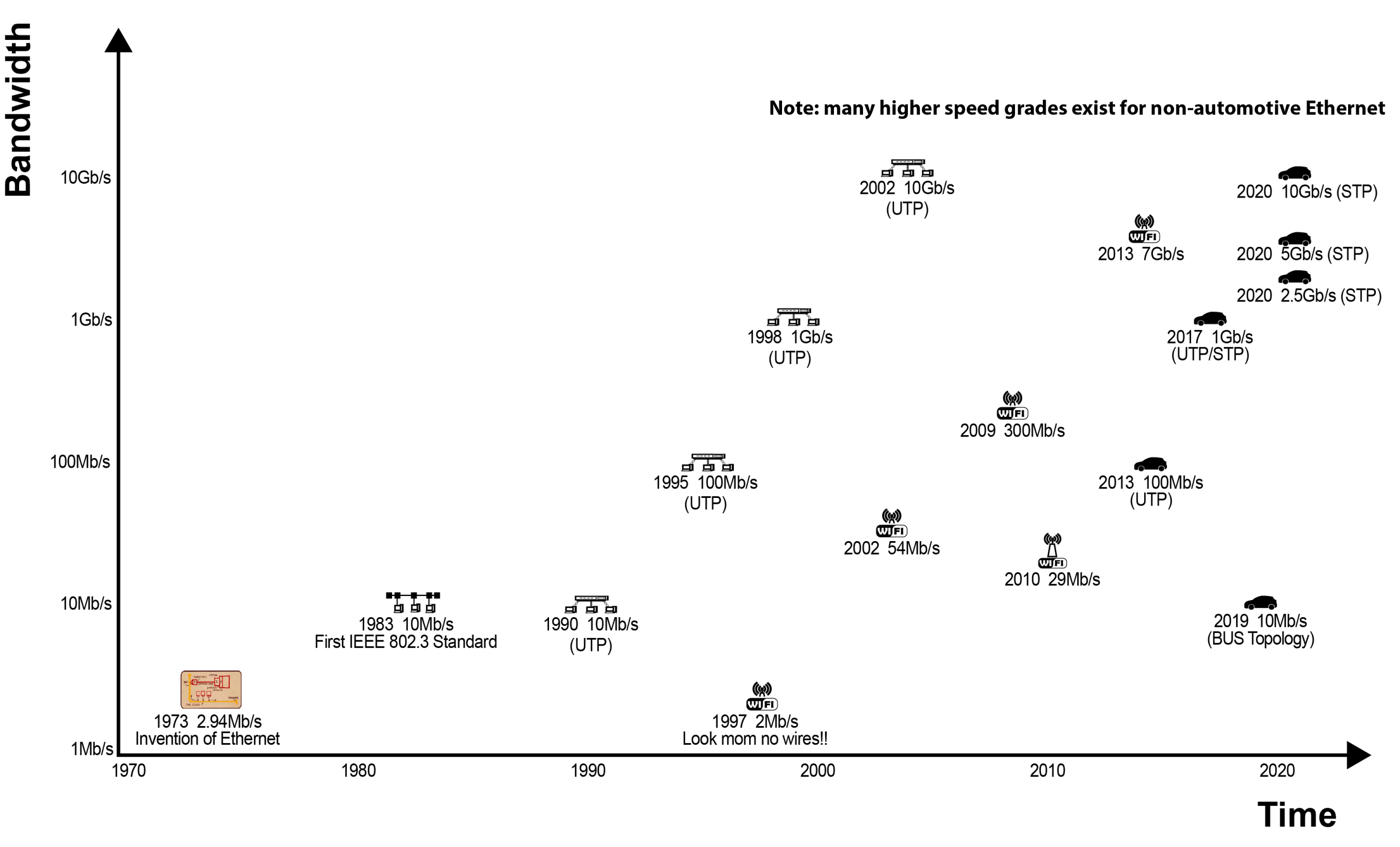
Bandwidth vs. Time Evolution of Ethernet Standards
Scaling Bandwidth with MultiGBASE-T1 (IEEE 802.3ch)
- Scalable Speed Grades: Single twisted-pair Automotive Ethernet standards scale seamlessly from 100 Mb/s (100BASE-T1) to 1 Gb/s (1000BASE-T1), up to 2.5 Gb/s, 5 Gb/s, and 10 Gb/s under MultiGBASE-T1 (IEEE 802.3ch).
- Layered OSI Compatibility: Because Ethernet maintains strict separation between its Physical Layer (Layer 1) and higher-level software layers, low-level hardware speeds can be upgraded without modifying established application software stacks.
- Forward Compatibility: Upper-layer software protocols—such as TCP/IP, SOME/IP, and AVB/TSN—operate identically regardless of whether the physical link runs at 100 Mb/s or 10 Gb/s.
Summary
By establishing a high-speed, layered network backbone, Multi-Gigabit Automotive Ethernet provides the scalable platform necessary to support Software-Defined Vehicles, rapid OTA software deployments, and advanced autonomous driving capabilities.

Analyze & Validate Multi-Gigabit Automotive Ethernet
As vehicle architectures transition to high-speed zonal backbones, validating multi-gigabit traffic alongside legacy buses requires specialized, high-performance hardware:
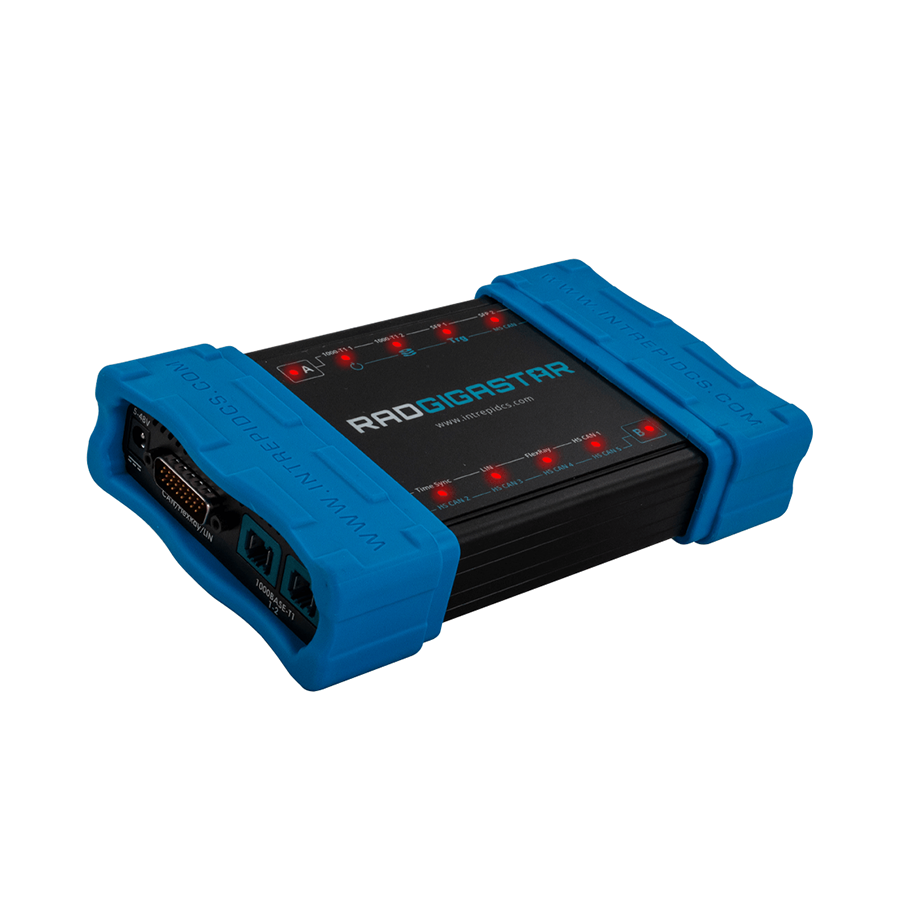
RAD-Gigastar Multi-Active Tap
Active network TAP and logger designed to capture high-speed Gigabit Automotive Ethernet traffic alongside CAN FD and LIN channels
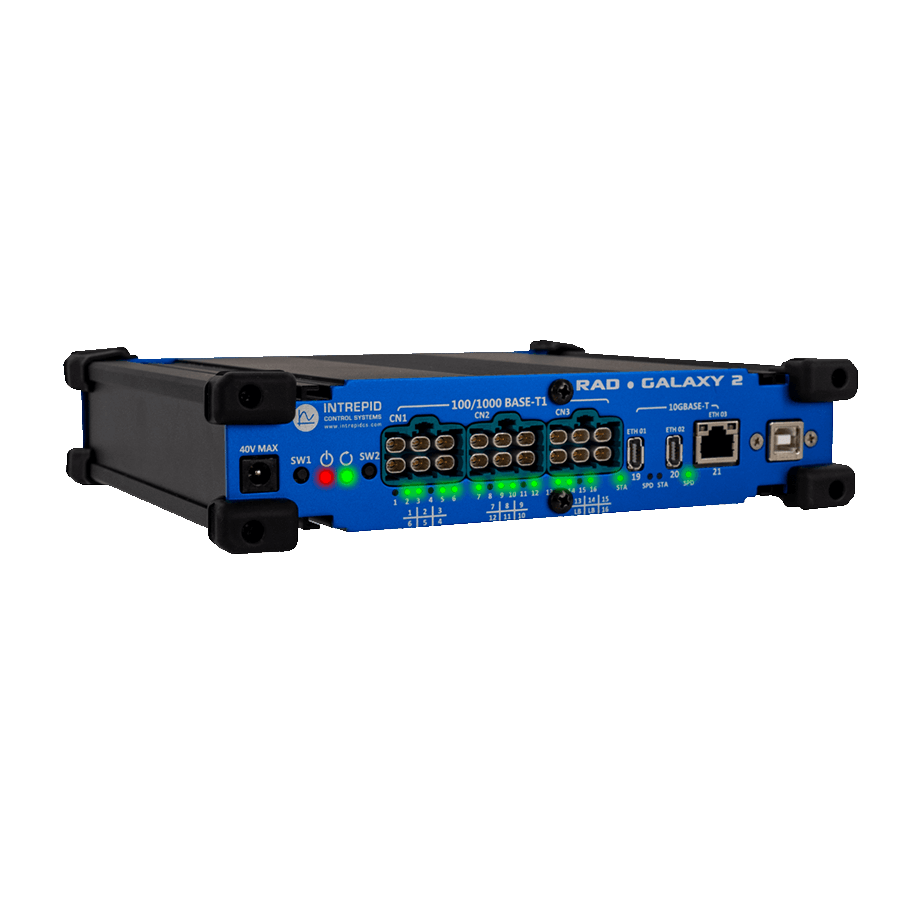
RAD-Galaxy 2 Active TAP & Gateway
Tap up to 8 Automotive Ethernet links (100BASE-T1/1000BASE-T1) with microsecond timestamping accuracy.
Vehicle Spy (VSpy) Software
Real-time monitoring, decoding, and simulation software for SOME/IP, DoIP, and TSN protocols.