Power over Data Lines (PoDL) vs. PoE: How IEEE 802.3bu Powers Vehicle ECUs
Introduction
Traditionally, networked electronic devices required two separate wire connections: one link for data communication and a second cable to supply DC power. In residential and office environments, Power over Ethernet (PoE) solved this dual-cable requirement by transmitting DC power directly over standard Ethernet cables. However, adapting traditional office PoE to the automotive world required overcoming fundamental differences in cabling, operating voltage levels, and electronic component power limits.
Why Standard PoE Does Not Fit Automotive Requirements
- Cable Pair Mismatch: Commercial PoE standards (IEEE 802.3af, 802.3at, and 802.3bt) were built around 4-pair (8-wire) unshielded twisted pair cables. In contrast, Automotive Ethernet relies on 1-pair (2-wire) unshielded twisted pair (UTP) copper wiring to satisfy aggressive weight and cost targets.
- Operating Voltage Differences: Standard office PoE operates at a high DC voltage range of 44 VDC to 57 VDC. Modern passenger vehicles run primarily on 12 VDC battery systems, while heavy-duty vehicles use 24 VDC.
- Internal ECU Converter Overhead: Applying 44 VDC to an electronic control unit (ECU) requires adding bulky, expensive internal voltage conversion circuitry to step down power to the 5 VDC or 3.3 VDC levels required by onboard microcontrollers.
How IEEE 802.3bu (PoDL) Solves Single-Pair Powering
Standardized under IEEE 802.3bu, 1-Pair Power over Data Lines (PoDL, pronounced “poodle”) brings DC power delivery to single balanced twisted-pair Ethernet networks.
- Tailored Automotive Voltage Classes: PoDL specifies operating voltage classes designed specifically for vehicle power systems, including 12 VDC unregulated/regulated, 24 VDC unregulated/regulated, and 48 VDC regulated systems.
- Direct Low-Voltage Supply: PoDL supports low-voltage delivery (as low as 5 VDC at the powered device), reducing the need for high-ratio DC-DC step-down conversion circuitry inside compact ECUs and camera sensors.
- Flexible Power Classes: PoDL defines ten power classes (Class 0 through Class 9) spanning power limits from 0.5 W up to 50 W to accommodate various devices, ranging from light sensor nodes to high-draw processing modules.
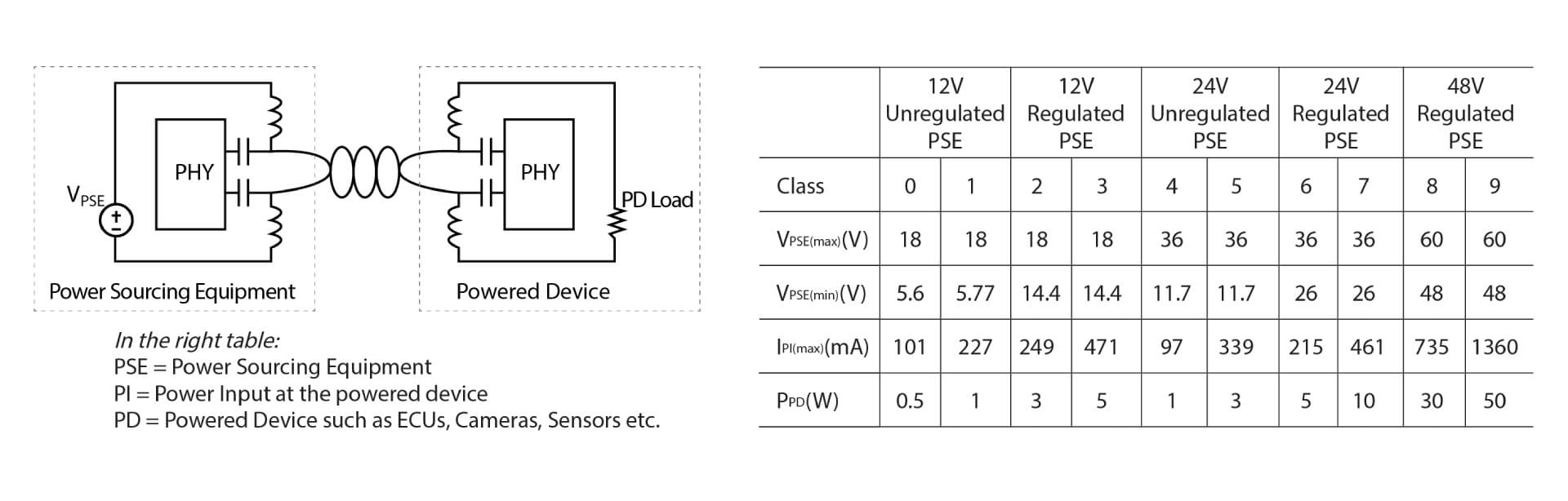
Power over Data Lines (PoDL) is an adaptation of the idea for Power over Ethernet (PoE) for single twisted pair networks. The table displays the possible power classes for PoDL. Aggregate Bandwidth
Weight and Bill-of-Materials (BOM) Savings
- Direct Cable Elimination: Combining power and data onto two copper wires removes extra dedicated power wiring from the vehicle harness.
- Lower Harness Weight: Removing dedicated power cabling reduces total harness weight, directly contributing to improved fuel efficiency in internal combustion vehicles and extended battery range in electric vehicles (EVs).
- Cost Reduction: Eliminating separate power lines removes physical items directly from a car’s bill of materials (BOM), delivering crucial savings given the tight profit margins across the automotive manufacturing industry.
Summary
By adapting Power over Ethernet concepts to single twisted-pair wiring, IEEE 802.3bu Power over Data Lines (PoDL) gives vehicle architects a standardized method to supply power and high-speed data across just two wires, reducing total vehicle weight, wiring complexity, and overall manufacturing costs.
Simplify Your Automotive Ethernet Bench & Fleet Testing
Validating single-pair Automotive Ethernet networks—whether powering ECUs via PoDL or analyzing 100/1000BASE-T1 communication—requires specialized hardware built specifically for vehicle environments:
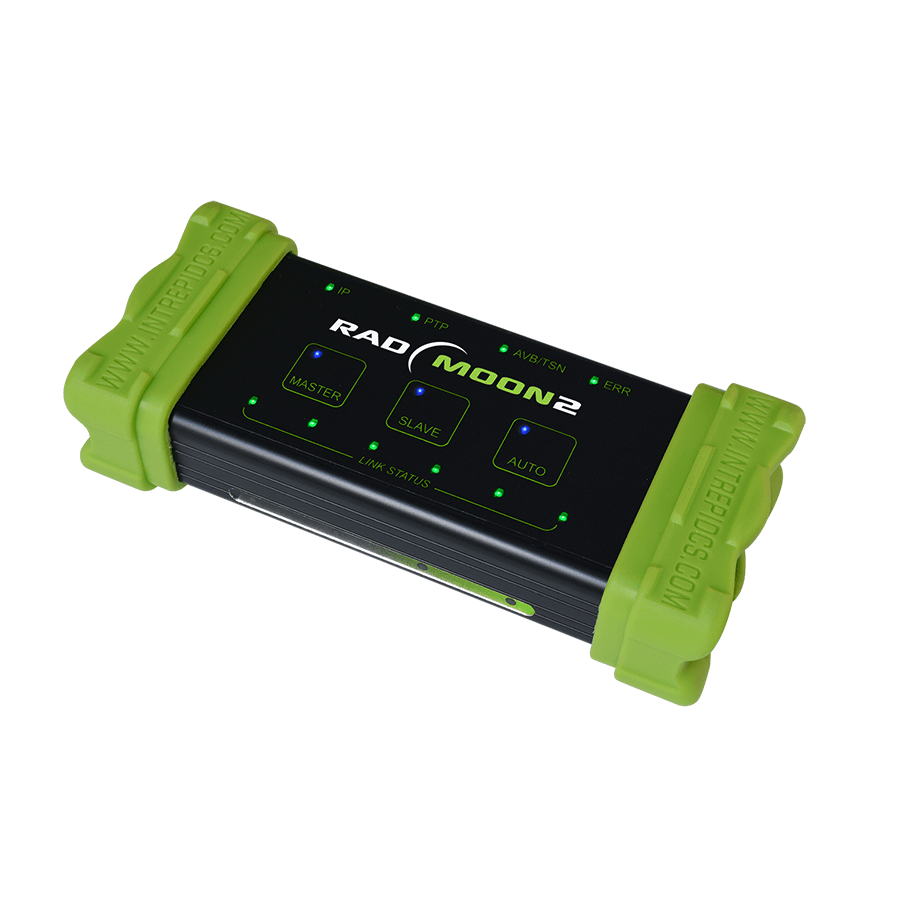
RAD-Moon 2 Media Converter
Connect your PC directly to 100BASE-T1 or 1000BASE-T1 ECU physical layers for quick software flashing and bench testing.
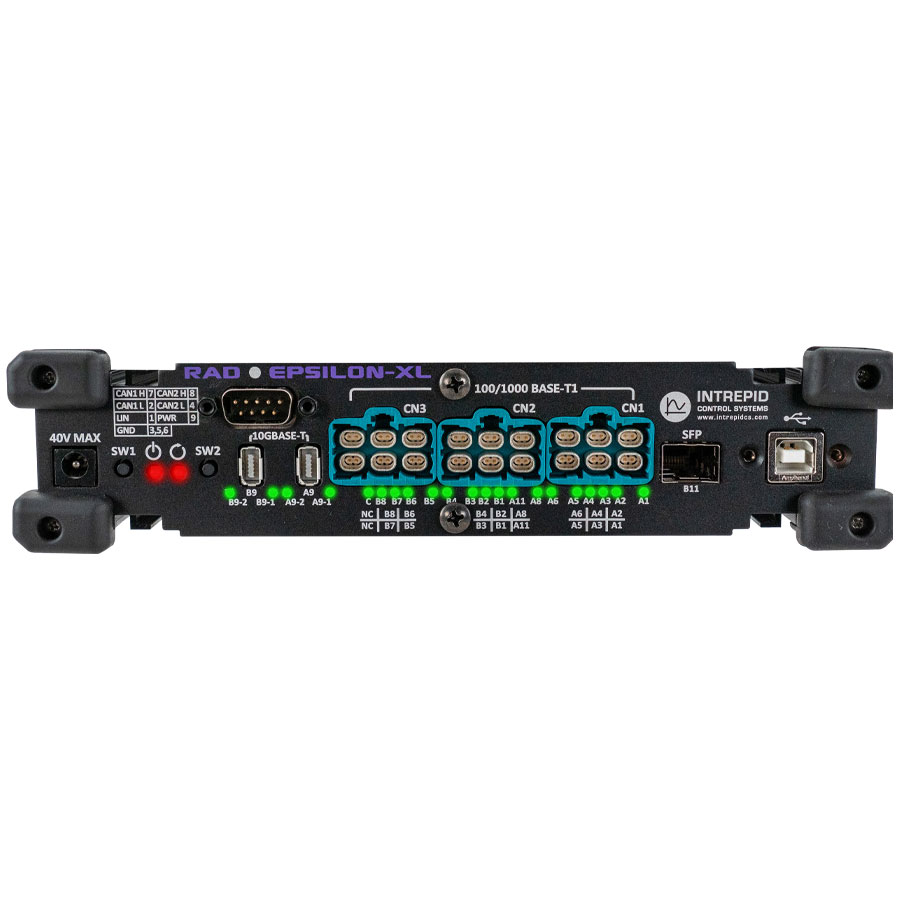
RAD-Epsilon XL Switch
A 19-port managed Automotive Ethernet switch designed specifically for vehicle and test bench development.
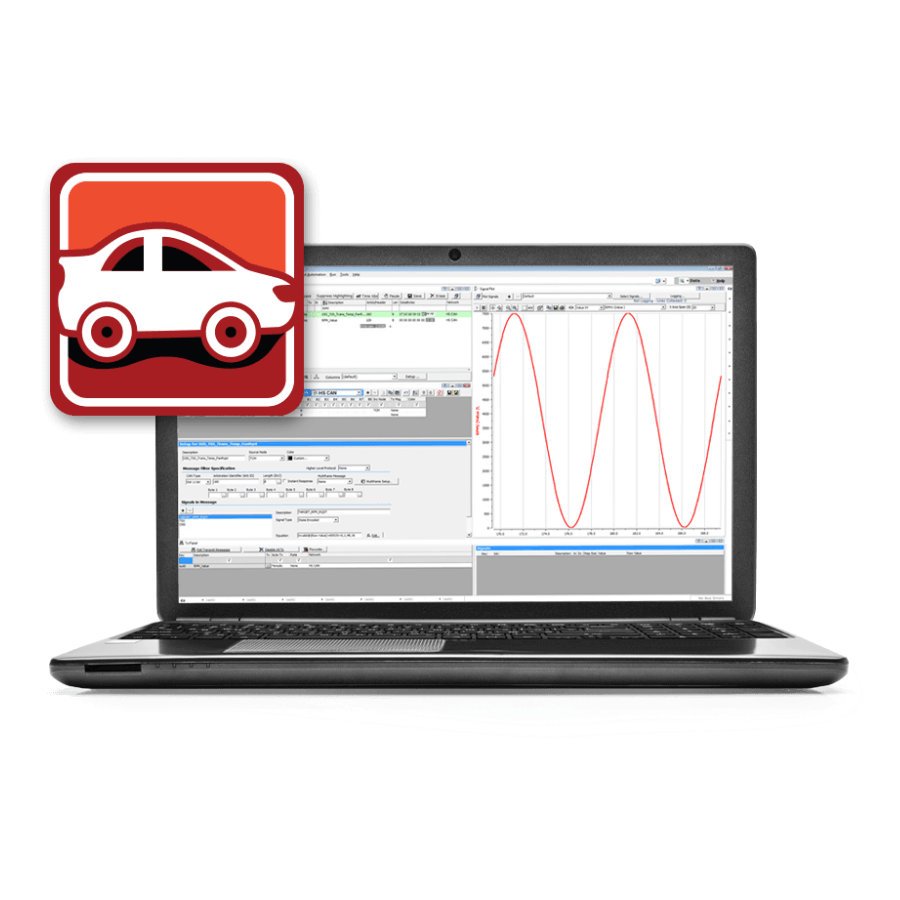
Vehicle Spy (VSpy) Software
Monitor, log, and analyze high-speed Automotive Ethernet frames alongside CAN FD, LIN, and diagnostic traffic in real time.